
The Great Debate: Buying Off-Plan vs. Completed Property in Kigali (2026 Update)

Kigali’s property market continues to mature in 2026, yet the fundamental decision facing buyers and investors hasn’t changed:
Should you buy off-plan — before construction finishes — or purchase a completed property?
The answer is increasingly nuanced. Construction cost pressures, financing realities, regulatory tightening, and expanding infrastructure investments have all reshaped the risk-return profile of both options. This update examines the trade-offs using current market signals to help buyers align their decision with capital structure, risk tolerance, and investment horizon.
Kigali Market Context (2026 Snapshot)
Before comparing strategies, it’s important to frame the macro environment:
- Construction inputs remain expensive. Imported materials such as cement, steel, and glass carry VAT and supply constraints, keeping development costs elevated.
- Financing is costly and restrictive. Mortgage rates typically sit around 11–16% with 20–30% down-payments, limiting leverage for middle-income buyers.
- Housing demand still exceeds supply, driven by a deficit of tens of thousands of units annually.
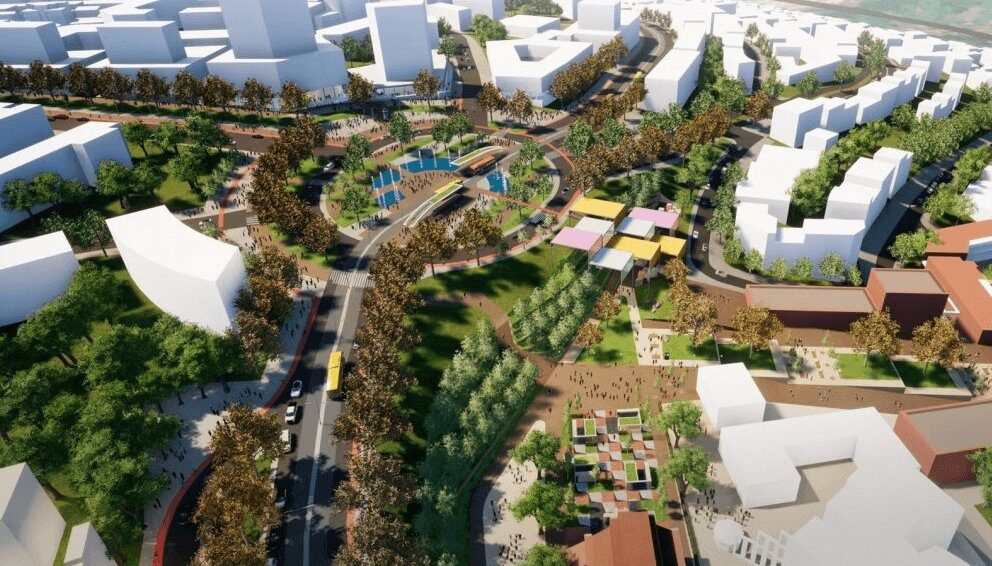
- Major infrastructure and development projects — including mixed-use towers and eco-housing estates — continue expanding Kigali’s housing pipeline and influencing future price appreciation.
- Regulatory oversight is tightening, with satellite monitoring identifying unauthorized construction and enforcing planning compliance.
Taken together, these conditions create a market characterized by:
- High structural demand
- Elevated build costs
- Strong development momentum
- Increased regulatory discipline
This is precisely the environment where the off-plan vs completed debate matters most.
Understanding Off-Plan Property
Definition:
Off-plan property is real estate purchased before construction completion — often based on architectural drawings or staged development phases.
Strategic Advantages
1️⃣ Lower entry price and appreciation potential
Early buyers often secure discounted pricing and benefit if market values rise before completion.
2️⃣ Flexible payment structures
Developers frequently offer staged installment plans aligned with construction milestones, improving liquidity management.
3️⃣ Customization and modern design benefits
Buyers may influence finishes and layouts while accessing newer building technologies and energy-efficient features.
4️⃣ Higher ROI potential in supply-constrained markets
In areas with strong rental demand, early acquisition can yield superior returns once the asset becomes operational.
Risk Exposure
Construction delays
Regulatory approvals, labour shortages, or supply disruptions can postpone delivery and income generation.
Market uncertainty
Property values may decline or stagnate before completion, eroding expected capital gains.
Developer reliability risk
Financial or operational instability may result in substandard delivery or project failure.
No immediate cash flow
Rental income is unavailable until handover.
Expectation mismatch
Final build quality or specifications may differ from plans if contracts lack precision.
Understanding Completed Property
Completed properties represent the opposite investment philosophy: certainty over optionality.
Advantages
1️⃣ Immediate usability or rental income
Cash flow begins instantly, reducing holding risk.
2️⃣ Full asset visibility
Buyers inspect actual quality, location dynamics, and neighborhood conditions before purchase.
3️⃣ Easier financing access
Banks are typically more willing to finance completed assets than speculative builds.
4️⃣ Reduced execution risk
No exposure to construction or developer performance uncertainty.
Constraints
Higher upfront pricing
Completed units embed developer margins and market appreciation.
Limited customization
Alterations require renovation capital.
Lower appreciation asymmetry
Value uplift between purchase and occupancy is typically smaller compared with early-stage acquisition.
Kigali-Specific Strategic Interpretation
Given current local conditions, the choice often correlates with capital structure and investor profile:
Off-Plan Fits Buyers Who:
- Possess liquidity buffers to tolerate delays
- Seek capital appreciation exposure
- Want phased payments rather than lump-sum financing
- Understand developer due diligence and contract structuring
This approach benefits from Kigali’s supply deficit and ongoing infrastructure expansion — both supportive of long-term value growth.
Completed Property Fits Buyers Who:
- Require immediate housing or income
- Depend on mortgage financing
- Have lower risk tolerance
- Prioritize certainty over speculative upside
High interest rates and strict lending conditions reinforce this pathway for many owner-occupiers.
Decision Framework (Practical Heuristic)
Rather than treating this as a binary choice, evaluate using four axes:
| Factor | Off-Plan Bias | Completed Bias |
|---|---|---|
| Liquidity flexibility | High | Low |
| Risk tolerance | High | Low |
| Time to income | Long horizon | Immediate |
| Market speculation appetite | Opportunistic | Conservative |
From an investment strategy perspective:
- Off-plan resembles equity-like exposure — higher volatility, higher upside
- Completed resembles bond-like stability — predictable yield, lower variance
In 2026 Kigali, the debate isn’t about which option is universally superior — it’s about strategic alignment.
- A city with rising construction costs, constrained financing, and sustained demand creates real appreciation opportunities for early-stage buyers.
- The same environment makes certainty and cash-flow stability valuable for risk-averse purchasers.
The most sophisticated investors increasingly adopt a hybrid approach — balancing speculative off-plan acquisitions with stabilized completed assets to diversify exposure across development cycles.


